
LANDSCAPE ZONING FOR FUNCTIONAL OUTDOOR SPACES
Hello, World!
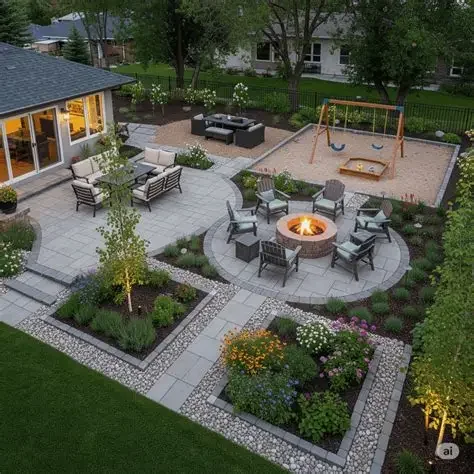
Introduction: Why Zoning Is the Backbone of Landscape Design
If garden planning is the brain of landscape design, then zoning is the skeleton.
Without proper zoning, even the most expensive plants, furniture, and materials will feel chaotic. Spaces will clash, movement will feel awkward, and the garden will lack purpose.
Landscape zoning is the process of dividing an outdoor space into functional areas, each with a clear role, identity, and relationship to the others.
In simple terms:
Zoning turns an empty plot into a well-organized outdoor “home without walls.”
This blog breaks down how to create functional, beautiful, and logical outdoor zones like a professional landscape architect.
1. Understanding What Landscape Zoning Really Means
Zoning is not just drawing boxes on a plan. It is about understanding human behavior outdoors.
People naturally need:
places to relax
spaces to move
areas to gather
zones for privacy
functional service areas
A well-zoned garden anticipates these needs before they are even spoken.
Core idea:
A good landscape is NOT one big open space.
It is a collection of smaller “experiences” connected smoothly.
2. The Main Types of Outdoor Zones
Every functional garden typically includes 5–7 key zones depending on size.
Common landscape zones:
| Zone | Purpose | Examples |
|---|---|---|
| Arrival Zone | First impression | Gate, entrance path |
| Transition Zone | Movement & flow | Walkways, stepping paths |
| Social Zone | Gathering | Patio, outdoor lounge |
| Active Zone | Use & interaction | Lawn, play area |
| Private Zone | Relaxation | Quiet seating, reading corner |
| Service Zone | Utility | Storage, compost, washing area |
| Feature Zone | Visual focus | Fountain, sculpture, tree |
Each zone must feel intentional and connected.
3. The Golden Rule of Zoning: Function First, Beauty Second
Many designs fail because they start with aesthetics instead of function.
Correct order:
Function (what happens here?)
Flow (how do people move?)
Structure (where are zones placed?)
Aesthetics (how does it look?)
A beautiful garden that doesn’t function well quickly becomes frustrating to use.
4. How to Divide a Garden into Zones
Zoning starts with observing the site and answering three key questions:
Where do people naturally enter?
Where is the sun strongest?
Where is privacy needed most?
Then you begin dividing space logically.
Simple zoning diagram:
[Entrance]
    ↓
[Transition Path]
    ↓
[Social / Lounge Zone] —— [Feature Zone]
    ↓
[Active Lawn Zone]
    ↓
[Private / Quiet Zone]
    ↓
[Service Area]
This structure ensures smooth flow from public → semi-public → private.
5. Zoning Based on Movement Flow
Movement is one of the most important aspects of zoning.
People should not feel forced to walk through spaces.
Types of movement:
A well-zoned garden often combines multiple movement types.
6. Spatial Hierarchy in Zoning
Not all zones are equal. Some are more important visually and functionally.
Hierarchy structure:
Primary Zone → Secondary Zone → Tertiary ZoneExample:
Primary: Outdoor lounge
Secondary: Lawn / garden beds
Tertiary: Storage or utility areas
This hierarchy helps guide design decisions like size, materials, and placement.
7. Zoning for Small Gardens vs Large Gardens
Small Gardens (Urban Homes, Courtyards)
Small spaces require multi-functional zoning.
StrategyDescriptionOverlapping zonesOne space serves multiple usesVertical zoningUse walls, planters, pergolasMinimal separationAvoid heavy barriers
Example:
A patio can be both a dining and lounge zone
A wall can be both privacy and planting zone
Large Gardens (Villas, Estates)
| Strategy | Description |
|---|---|
| Overlapping zones | One space serves multiple uses |
| Vertical zoning | Use walls, planters, pergolas |
| Minimal separation | Avoid heavy barriers |
Large spaces allow clear separation of zones.
Example:
Separate entertainment area
Dedicated lawn zone
Independent garden walkways
8. Zoning Using Hardscape Elements
| Element | Function |
|---|---|
| Paving | Defines walking areas |
| Retaining walls | Separates levels |
| Pergolas | Marks lounge zones |
| Edging | Controls planting zones |
| Steps | Connect elevation zones |
Hardscape is the most effective way to define zones physically.
Tools for zoning:
Hardscape acts like “invisible walls” without closing off space.
9. Planting as a Zoning Tool
Plants are not just decoration—they are natural dividers.
Plant zoning techniques:
Tall hedges for privacy zones
Flower beds for visual separation
Trees for shade zoning
Shrubs for boundary definition
Example plant zoning structure:
Tall Trees → Privacy Hedge → Flower Beds → Lawn → PathwayPlants make zoning feel soft and natural rather than rigid.
10. Creating Privacy Through Zoning
Privacy is one of the most important landscape requirements.
Privacy levels:
| Level | Solution |
|---|---|
| Full privacy | Walls, hedges, screens |
| Semi-privacy | Pergolas, shrubs |
| Visual privacy | Plant layering |
| Acoustic privacy | Dense planting |
A well-designed garden always has layers of privacy, not just one barrier.
11. Zoning for Social Interaction
Outdoor social spaces should feel welcoming and open.
Key elements:
central seating arrangement
circular or L-shaped layouts
clear circulation space
proximity to house (kitchen access)
Social zone layout example:
Seating → Coffee Table → Circulation Space → Access PathThe goal is comfort and interaction, not crowding.
12. Environmental Zoning (Sun, Wind, and Shade)
| Area | Best Use |
|---|---|
| Full sun | Lawn, vegetables |
| Partial shade | Seating, shrubs |
| Full shade | Relaxation zones |
Natural conditions strongly influence zoning decisions.
Sun-based zoning:
AreaBest UseFull sunLawn, vegetablesPartial shadeSeating, shrubsFull shadeRelaxation zones
Wind zoning:
Avoid placing seating in strong wind corridors
Use hedges or walls as windbreaks
Ignoring environmental zoning leads to uncomfortable outdoor spaces.
13. Functional Balance Between Zones
A well-zoned garden maintains balance between:
hardscape and softscape
open and closed spaces
active and passive areas
Ideal balance:
| Element | Percentage |
|---|---|
| Open space (lawn, paths) | 40% |
| Planting zones | 35% |
| Built zones (seating, structures) | 25% |
This balance ensures usability without overcrowding.
14. Common Zoning Mistakes
| Mistake | Result |
|---|---|
| No clear function per zone | Confusion |
| Overlapping noisy and quiet zones | Poor relaxation |
| Ignoring movement flow | Awkward circulation |
| Too many zones in small space | Cluttered design |
| No visual hierarchy | Flat design |
15. Real-Life Example: A Well-Zoned Residential Garden
Sample layout breakdown:
| Zone | Function |
|---|---|
| Entrance path | Arrival experience |
| Side hedge zone | Privacy buffer |
| Central lawn | Family activity |
| Pergola lounge | Relaxation |
| Corner garden bed | Visual interest |
| Back utility zone | Storage & compost |
Each zone works independently but connects seamlessly.
Conclusion: Zoning Creates Order, Comfort, and Meaning
Landscape zoning is what transforms an empty yard into a living environment.
Without zoning:
spaces feel random
movement feels confusing
gardens lose identity
With proper zoning:
every space has purpose
movement feels natural
outdoor living becomes enjoyable
maintenance becomes easier
A well-zoned garden is not just designed—it is experienced.
