

CREATING FOCAL POINTS IN LANDSCAPES
Focal points are the anchors of a garden — they guide the eye, set rhythm, and create moments of pause. Whether it’s a sculpture, a water feature, or a framed planting, the key lies in balance. Too many focal points lead to visual confusion, while poor placement weakens impact. Scale matters: compact features suit small gardens, medium structures fit mid‑sized spaces, and bold statement pieces command large landscapes.
Contrast and hierarchy are powerful tools. A bright flower bed against green foliage, a smooth sculpture among rough textures, or a tall tree rising above low planting all draw attention naturally. Lighting extends this effect into the evening, with spotlights highlighting primary features, ambient glow supporting secondary elements, and soft path illumination guiding movement.
Ultimately, focal points should not overwhelm but invite exploration — leading visitors from curiosity at the entrance, through discovery along pathways, to satisfaction at the exit.
USING CURVES VS STRAIGHT LINES IN GARDEN DESIGN
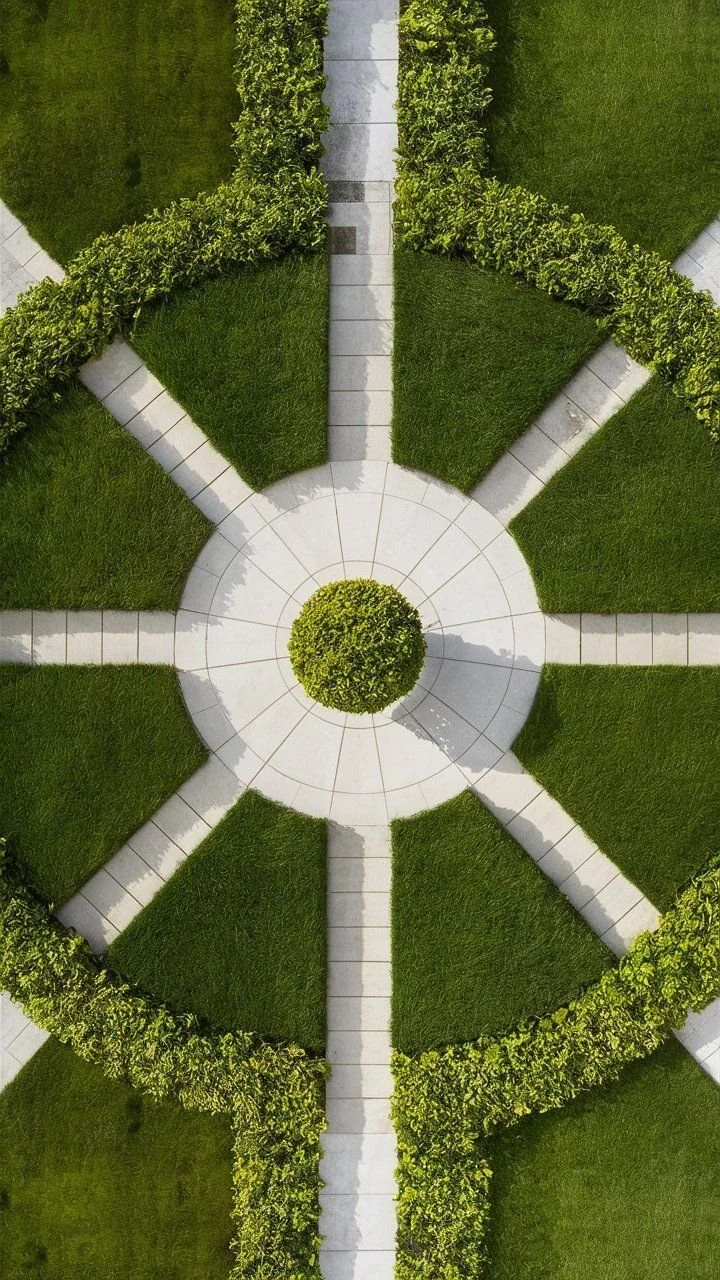
Garden design is a delicate balance between structure and flow. Straight lines bring order, discipline, and speed — perfect for entrances, lawns, and formal layouts. Curves, on the other hand, invite relaxation, curiosity, and a sense of discovery, guiding visitors through hidden pockets and layered plantings.
Overusing straight lines can make a garden feel cold and rigid, while too many curves risk creating confusion and disorientation. The key lies in aligning pathways, borders, and features with the architecture and overall vision, ensuring harmony rather than chaos.
Whether it’s a linear paving entrance or a curved stone path, each choice shapes not only the look of the garden but also the psychological response of those who experience it.