USING CURVES VS STRAIGHT LINES IN GARDEN DESIGN

Introduction: The Silent Language of Garden Geometry
Every garden speaks a visual language—and the most powerful part of that language is line work.
In landscape design, there are only two fundamental ways to shape space:
Straight lines (geometry, order, structure)
Curves (flow, nature, emotion)
These two design tools are not just aesthetic choices. They influence:
how people move through a space
how large or small a garden feels
how calm or energetic a space becomes
how formal or relaxed the environment feels
A well-designed garden is rarely purely curved or purely straight. Instead, it is a controlled balance of both systems.
This blog breaks down how to use curves and straight lines intentionally—like a landscape architect designing real outdoor spaces.
1. Understanding Straight Lines in Landscape Design
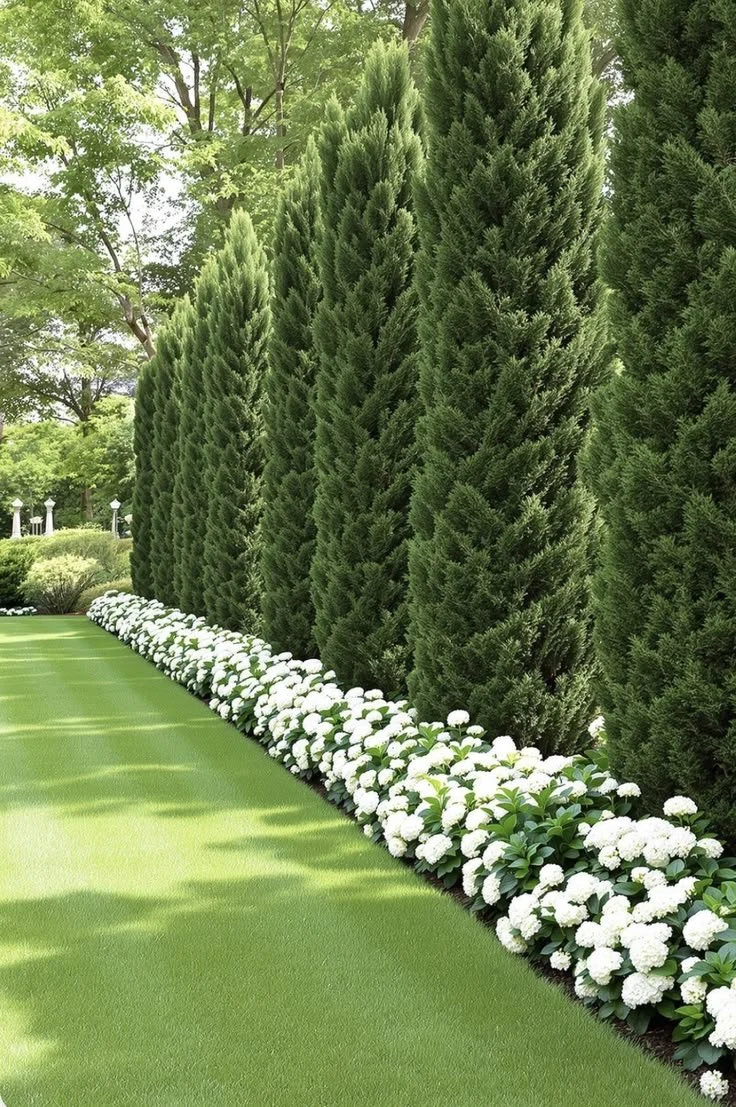
Straight lines represent structure, control, and clarity.
They are heavily influenced by architecture and modern design principles.
Characteristics of Straight-Line Design
geometric order
predictable movement
strong directionality
formal composition
clear boundaries
Emotional impact of straight lines:
| Effect | Description |
|---|---|
| Calm control | Feels organized and intentional |
| Formality | Feels structured and architectural |
| Efficiency | Direct movement paths |
| Stability | Strong visual grounding |
Common uses in gardens:

driveways
walkways
boundary walls
modern patios
pool decks
symmetrical layouts
Straight-line layout diagram:
Entrance → Straight Path → Central Lawn → Axis Point → Feature Wall2. Understanding Curves in Landscape Design
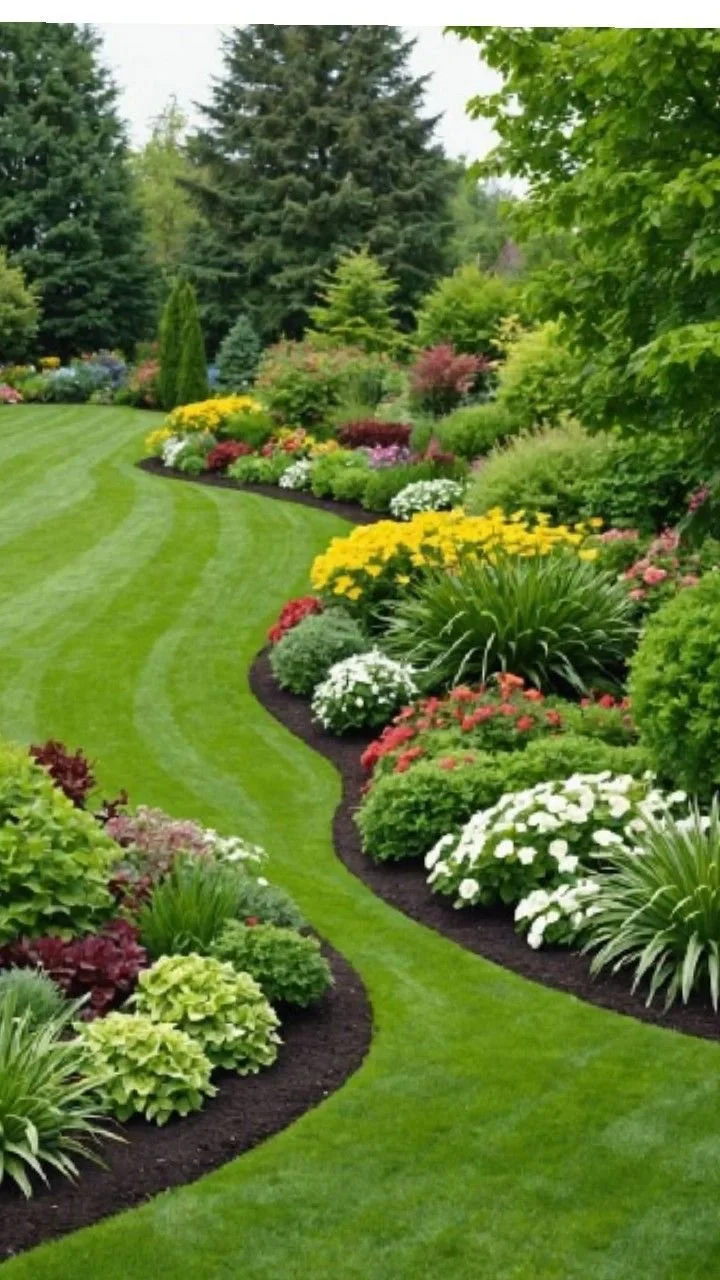
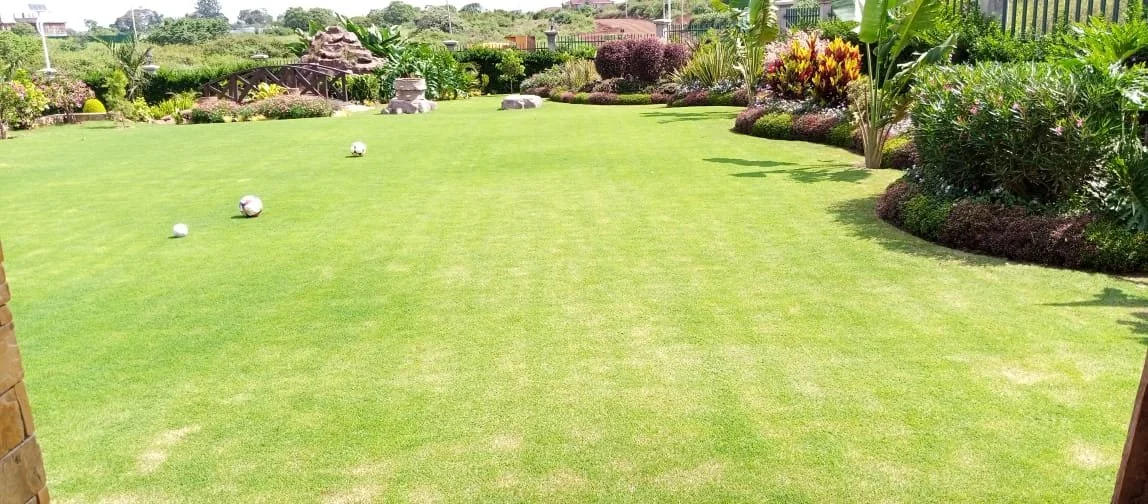
Curves represent nature, softness, and emotional flow.
They are inspired by natural landscapes like rivers, hills, and organic landforms.
Characteristics of curved design
organic movement
unpredictable flow
soft transitions
natural appearance
visual curiosity
Emotional impact of curves:
| Aspect | Straight Lines | Curves |
|---|---|---|
| Effect | Structured, formal | Organic, flowing |
| Space Feeling | Open & extended | Layered & hidden |
| Visibility | Full view | Partial reveal |
| Movement Speed | Fast | Slow |
Common uses in gardens:
natural pathways
tropical gardens
flower beds
informal seating areas
water features
Curved layout diagram:
Entrance → Curved Path → Hidden Seating → Garden Pocket → Feature Tree3. The Psychology of Lines in Outdoor Spaces
Psychological effects table:
Line TypePsychological ResponseStraight linesFocus, discipline, speedCurved linesRelaxation, curiosity, flow
| Line Type | Psychological Response |
|---|---|
| Straight lines | Focus, discipline, speed |
| Curved lines | Relaxation, curiosity, flow |
Key insight:
Straight lines tell the body where to go. Curves invite the body to explore.
4. Movement Flow Comparison
Movement is one of the most important outcomes of line choice.
Straight-line movement
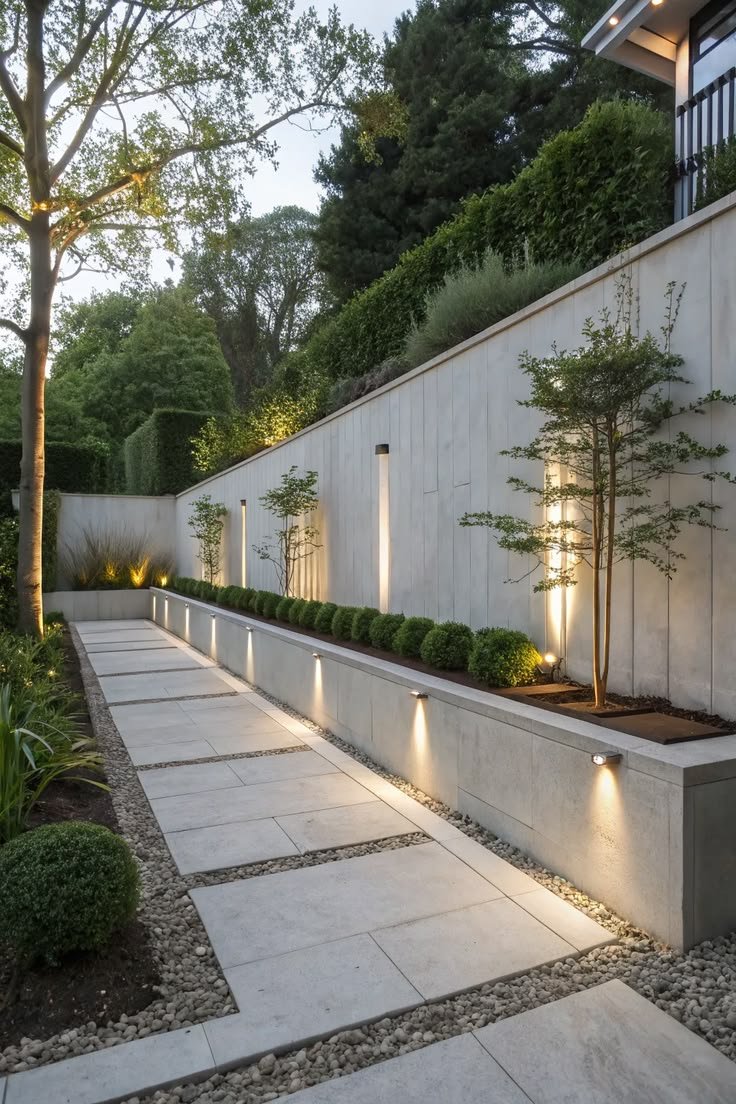
direct
fast
predictable
Flow diagram:
Point A → Straight Path → Point B → DestinationBest for:
entrances
commercial gardens
modern homes
structured layouts
Curved-line movement
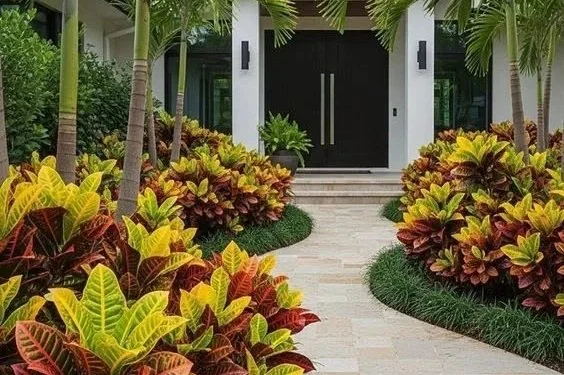
slow
exploratory
engaging
Flow diagram:
Entrance → Curve → Pause Point → Curve → Discovery Zone → DestinationBest for:
relaxation gardens
tropical landscapes
sensory gardens
private residences
5. Spatial Perception: How Lines Affect Space Size
Lines also change how big or small a garden feels.
Straight lines:
make spaces feel larger and more structured
emphasize depth and direction
Curves:
make spaces feel longer and more immersive
hide full visibility of space
Spatial illusion comparison:
| Aspect | Straight Lines | Curves |
|---|---|---|
| Effect | Structured, formal | Organic, flowing |
| Space Feeling | Open & extended | Layered & hidden |
| Visibility | Full view | Partial reveal |
| Movement Speed | Fast | Slow |
6. When to Use Straight Lines
Straight lines are not just for modern design—they are for control and clarity.
Best applications:
1. Entry zones
Creates strong first impressions.
2. Driveways
Ensures efficiency and direction.
3. Small gardens
Makes spaces feel larger and more organized.
4. Modern architecture integration
Aligns with building geometry.
Straight-line garden example:
Gate → Linear Walkway → Lawn Grid → Seating Axis → Feature Wall7. When to Use Curves
Curves are best when you want emotional engagement and natural flow.
Best applications:
1. Tropical gardens
Mimics natural jungle movement.
2. Large landscapes
Creates exploration routes.
3. Relaxation spaces
Slows down movement.
4. Garden storytelling
Creates visual discovery.
Curved garden example:
Entrance → Soft Curve Path → Plant Layer → Hidden Bench → Water Feature → Garden Core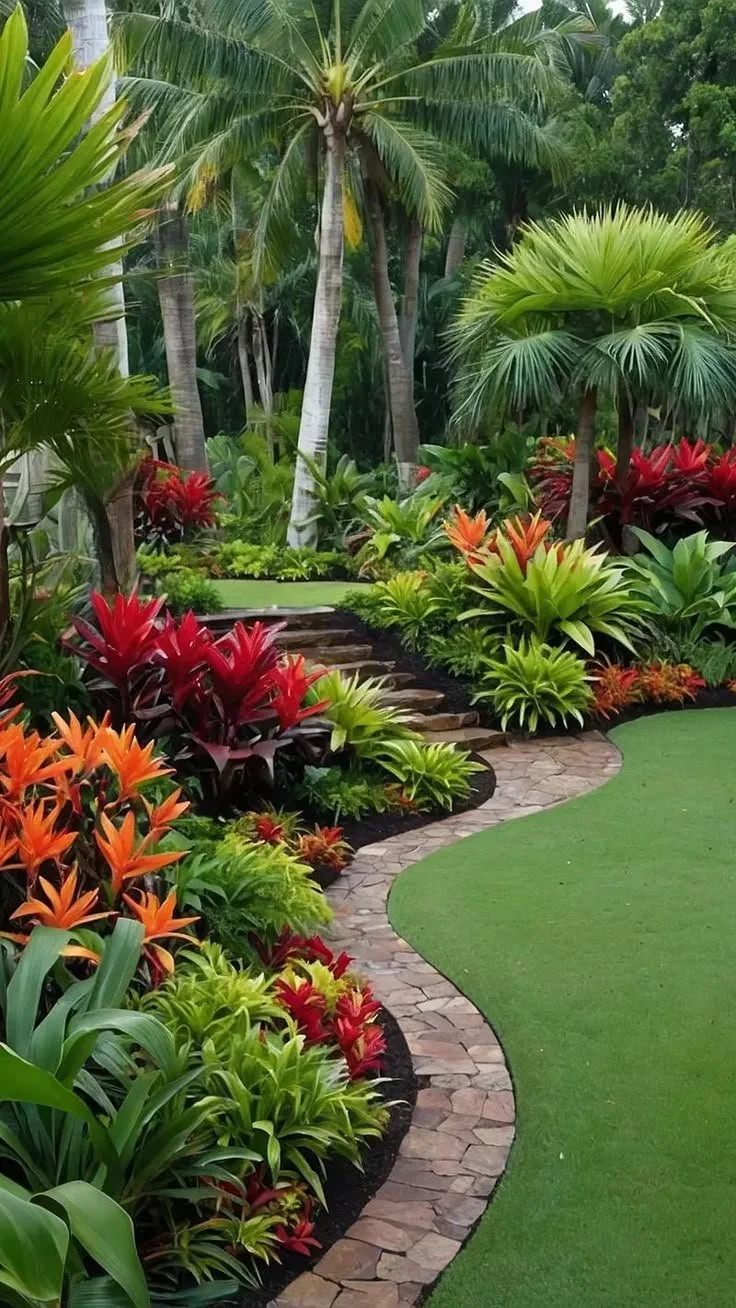
8. Combining Curves and Straight Lines (Advanced Design)
The most successful landscapes are hybrids.
Combination principle:
Straight lines provide structure. Curves provide life.
Balanced design ratio:
ElementPercentageStraight lines50–70%Curves30–50%

Hybrid layout diagram:
Entrance (Straight)
      ↓
Curved Garden Path
      ↓
Structured Seating Zone
      ↓
Organic Planting Zone
      ↓
Defined Focal Point
9. Design Psychology Framework
Every design decision should answer this:
What do I want the user to feel?
GoalLine TypeCalm and orderStraight linesExplorationCurvesLuxury controlStraight dominantNatural escapeCurves dominantBalanced experienceHybrid
10. Common Mistakes in Line Design
| Mistake | Result |
|---|---|
| Overusing straight lines | Cold, rigid garden |
| Too many curves | Confusing layout |
| No clear direction | Disoriented movement |
| Mixing styles randomly | Visual chaos |
| Ignoring architecture alignment | Design disconnect |
11. Real-Life Application Example
Modern residential garden (Straight-line dominant)
| Zone | Design Element |
|---|---|
| Entrance | Linear paving |
| Lawn | Rectangular grid |
| Seating | Structured pergola |
| Borders | Straight hedges |
Outcome:
clean
minimal
easy to maintain
Tropical residential garden (Curve dominant)
| Zone | Design Element |
|---|---|
| Entrance | Curved stone path |
| Garden core | Dense planting |
| Seating | Hidden lounge pocket |
| Feature | Water element |
Outcome:
immersive
natural
relaxing
12. Design Decision Checklist
Before choosing line style, ask:
What is the architecture style of the house?
Do I want formality or relaxation?
Is the garden small or large?
How much maintenance is expected?
Should movement be fast or slow?
Conclusion: Lines Shape Experience, Not Just Layout
In landscape design, lines are not just drawing tools—they are behavioral tools.
Straight lines create clarity, order, and structure.
Curves create emotion, softness, and exploration.
The best gardens do not choose one over the other—they orchestrate both intentionally.
When used correctly, line design transforms a simple outdoor space into a guided experience where every step feels deliberate, meaningful, and beautifully composed.
